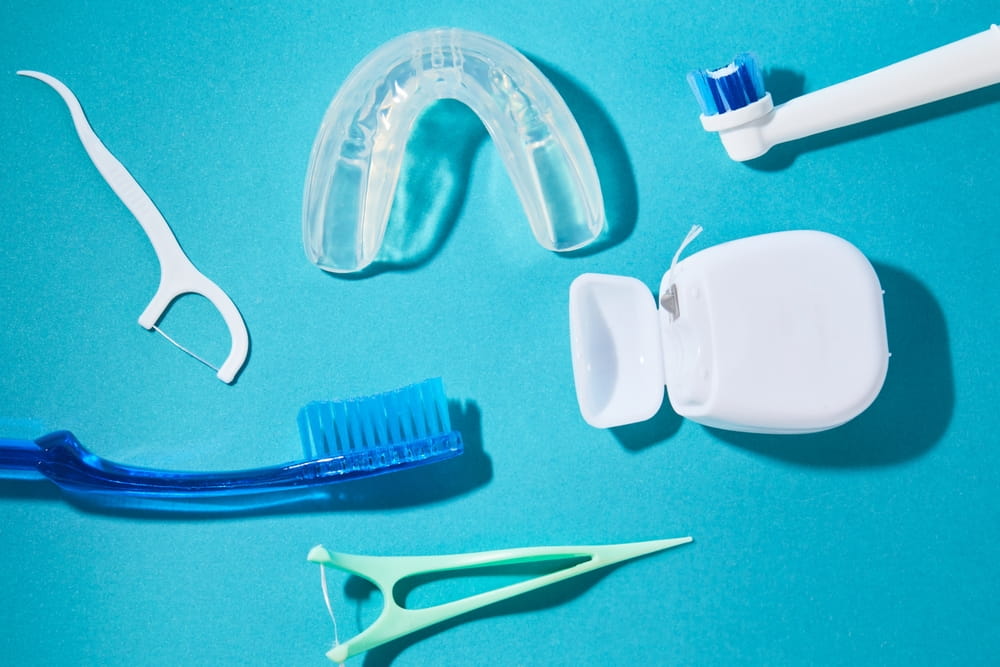


In recent years, at-home clear aligner systems have become increasingly popular among patients looking for a more convenient and affordable way to straighten their teeth. Companies advertise remote orthodontic treatment with minimal office visits, promising results through mail-order trays and virtual monitoring. For many adults and teens, this approach feels appealing because it eliminates frequent appointments and may appear more cost-effective upfront.
At practices like Davis Family Orthodontics, where patients across Lawrenceville, Morrow, Stone Mountain, and Loganville, GA are exploring orthodontic options, questions about safety and effectiveness are becoming more common. While at-home aligners can work in certain mild cases, they are not a one-size-fits-all solution. Understanding how they differ from in-office care is essential for making an informed decision about your oral health.
How At-Home Aligners Work
At-home aligner systems typically begin with an impression kit or a scan performed at a retail location. These impressions are then reviewed remotely by a dental professional who designs a series of aligners intended to gradually move the teeth. Patients receive multiple trays at once and switch them out every one to two weeks based on a predetermined schedule.
Unlike in-office orthodontic care, there is usually no ongoing physical evaluation of how the teeth, gums, and jaw are responding to treatment. Communication often occurs through online portals, and adjustments are limited. While this model may seem efficient, it relies heavily on the assumption that tooth movement will follow the initial plan exactly, which is not always the case.
Key Differences Between At-Home and In-Office Treatment
One of the most important distinctions between at-home aligners and in-office care is the level of supervision. Orthodontic treatment is a biological process that involves bone remodeling, gum health, and precise tooth movement. Without regular in-person assessments, it can be difficult to identify complications early.
Another major difference is diagnostic capability. In-office orthodontic care typically includes X-rays, digital scans, and comprehensive exams. These tools help identify underlying issues such as impacted teeth, bone loss, or jaw alignment problems that may not be visible in a simple impression. Patients exploring options like Types Of Braces or Invisalign Treatment benefit from a customized plan that accounts for their full oral health picture.
Potential Risks of At-Home Aligners
While at-home aligners can be effective for minor cosmetic adjustments, they may carry risks when used without proper supervision. Tooth movement that is not carefully controlled can lead to bite problems, uneven alignment, or even damage to the roots of teeth. In some cases, patients may experience gum irritation or recession if aligners do not fit properly.
There is also the risk of incomplete treatment. Without ongoing monitoring, aligners may not achieve the desired results, leaving patients with unresolved alignment issues. Correcting these problems later may require more complex orthodontic care than if treatment had been guided properly from the beginning. This is especially important for younger patients considering options like Orthodontics For Children or Orthodontics For Teens, where growth and development must be carefully managed.
Benefits of In-Office Orthodontic Care
In-office orthodontic treatment offers a higher level of precision and safety due to continuous supervision and personalized adjustments. Orthodontists can track progress, make real-time modifications, and address any concerns before they become significant issues. This hands-on approach helps ensure that teeth are moving correctly and that the bite remains balanced throughout treatment.
Patients also benefit from access to a wider range of treatment options. Whether considering traditional braces or clear aligners like Invisalign Treatment for Teens or adult-focused solutions such as Orthodontics For Adults, in-office care allows for customization based on individual needs. This level of flexibility is especially important for complex cases that require more than simple alignment.
When At-Home Aligners May Be Appropriate
There are situations where at-home aligners may be suitable, particularly for adults with very mild crowding or spacing issues who have previously undergone orthodontic treatment. In these cases, minor adjustments may be achieved with minimal intervention. However, even in these scenarios, it is often recommended to consult with a dental professional before beginning treatment.
Patients should also be aware of the importance of realistic expectations. At-home aligners are typically designed for cosmetic improvements rather than comprehensive orthodontic correction. Individuals seeking significant changes in bite alignment or jaw positioning will likely require more advanced care to achieve safe and lasting results.
Signs You Should Choose In-Office Care
Certain conditions make in-office orthodontic treatment the safer and more effective option. Patients experiencing moderate to severe crowding, bite misalignment, jaw pain, or shifting teeth should seek professional evaluation. Additionally, individuals with a history of dental issues such as gum disease or tooth loss may require closer monitoring during treatment.
Here are some signs that in-office care may be the better choice:
- Difficulty chewing or biting evenly
- Noticeable jaw discomfort or clicking
- Teeth that appear to be shifting rapidly or unevenly
- Previous orthodontic relapse
- Concerns about gum health or tooth stability
Choosing the right treatment approach is not just about convenience—it is about protecting long-term oral health and ensuring predictable outcomes.
Making an Informed Decision for Your Smile
Deciding between at-home aligners and in-office orthodontic care involves weighing convenience against safety and effectiveness. While remote treatment options may seem appealing, they lack the comprehensive oversight that is often necessary for successful orthodontic outcomes. Understanding the limitations and potential risks can help patients make more confident decisions about their care.
For individuals in Lawrenceville, Morrow, Stone Mountain, and Loganville, GA, Davis Family Orthodontics serves as a trusted resource for understanding orthodontic treatment options and what to expect from each approach. Taking the time to evaluate your needs and consult with a professional can make a significant difference in both your experience and your results.
Resources
American Association of Orthodontists. (2020). Consumer Alert: Orthodontics. American Association of Orthodontists.
Kravitz, N. D., Burris, B., Butler, D., & Dabney, C. W. (2017). Teledentistry, Do-It-Yourself Orthodontics, and Remote Treatment Monitoring. Journal of Clinical Orthodontics.
Wexler, A., Nagappan, A., Beswerchij, A., & Choi, R. (2020). Direct-to-Consumer Orthodontics: Surveying the User Experience. Journal of the American Dental Association.